
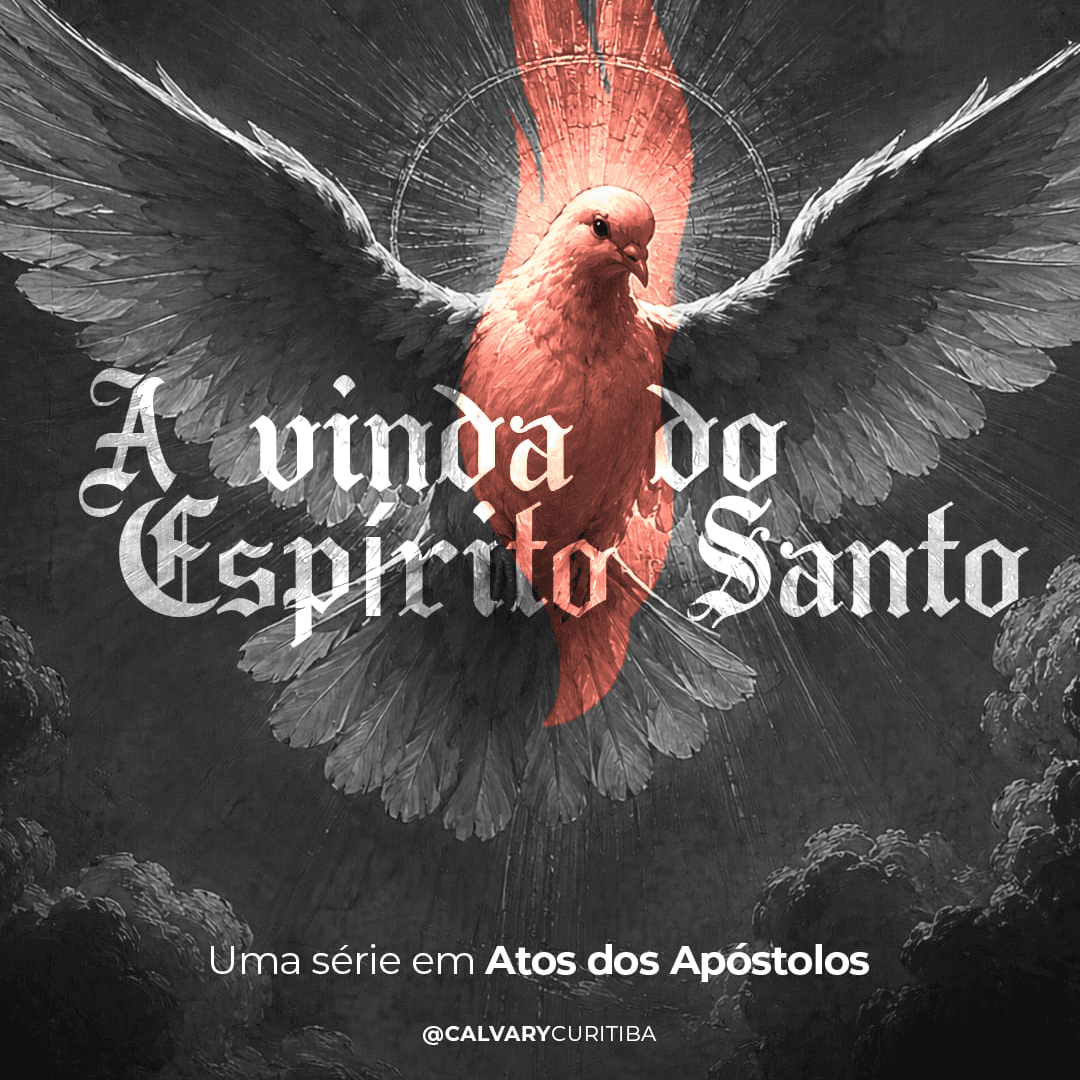
Series Acts of the Apostles
The Coming of the Holy Spirit
Acts 2:1-13 · Kaká Monteiro · May 24, 2026
The wind that fills the house, the fire that rests on each one, the languages that undo Babel
The central idea
“At Pentecost, the Spirit who once rested on one mediator comes on each one, and gathers the nations.”
At Sinai, God gave the Law through Moses; at Pentecost, he pours out the Spirit on everyone. At Babel, the languages divided; now each one hears the wonders of God in their own tongue. The same Spirit is still available today, given according to God's will to those who wait and desire.
The message in 3 movements
- 01
A people gathered and waiting.
The disciples obeyed and waited ten days, not knowing when. Being together in one place is a picture of the church: people of different stories, places and opinions united in one name. You can't be God's people alone.
- 02
A new Sinai: the Spirit on each one.
Wind and fire recall the breath of creation, Ezekiel's dry bones and the fire of Sinai. But now the tongues rest on each one: there is no longer a human mediator between us and God. The sign passes; the gift is being filled with the Spirit, who overflows in witness.
- 03
Babel in reverse: the gospel for the nations.
The miracle isn't only speaking other languages: it is being understood. God reverses the scattering of Babel and brings unity. The gospel is born multicultural. And, just as today, God's work provokes two responses: wonder or mockery.
Reading the text · Acts 2:1-13
Acts 2:1-4 · Wind and fire
When the day of Pentecost came, they were all together in one place. Suddenly a sound like a violent wind came from heaven and filled the whole house, and tongues like fire rested on each of them. All were filled with the Holy Spirit and began to speak in other tongues.
Acts 2:5-11 · Each in his own language
Devout Jews from every nation were in Jerusalem. Hearing the sound, a crowd gathers, bewildered: aren't these Galileans? How is it that each of us hears them in our native language? Parthians, Medes, Elamites, Romans, Cretans, Arabs: all hear the wonders of God.
Acts 2:12-13 · Amazed and mocking
Amazed and perplexed, they ask one another: what does this mean? Others mock them: they have had too much wine.
Questions for the group
To open: tell about a time you were somewhere you didn't understand the language or the customs. What was it like when someone finally made you feel understood?
- 1
The disciples obeyed and waited ten days without knowing when the Spirit would come. In which area of your life are you waiting on God? What helps you wait in faith?
- 2
At Sinai there was a mediator; at Pentecost the Spirit came on each one. What changes in your life of faith knowing you can go to God directly, at any time?
- 3
Babel separated; Pentecost united people of different languages and backgrounds. Which differences do you find hardest to cross in the church? How does the Spirit help with that?
- 4
Faced with God's work, some marveled and others mocked. When you see God act in a way that is outside your habits, what is your usual reaction?
Key passages
- Genesis 11:7-9: At Babel, God confuses the language and scatters the peoples. At Pentecost, the languages gather and make understood: Babel in reverse.
- Ezekiel 37:9-10: "Come, breath, from the four winds and breathe into these slain." The same breath that gives life to the dry bones fills the house in Acts 2.
- John 16:7: "It is for your good that I am going away. Unless I go away, the Advocate will not come." Jesus promised the Spirit who is now poured out.
To close
A step for this week. Set aside time to ask God, sincerely, to fill your life with his Spirit, with no formula and no hurry. And get close to someone at church who is very different from you: ask about their story.
Prayer. Thank God that the Spirit was poured out on each of us and no one needs a mediator to come to God. Ask him to fill us, unite us amid our differences and send us to the nations.